

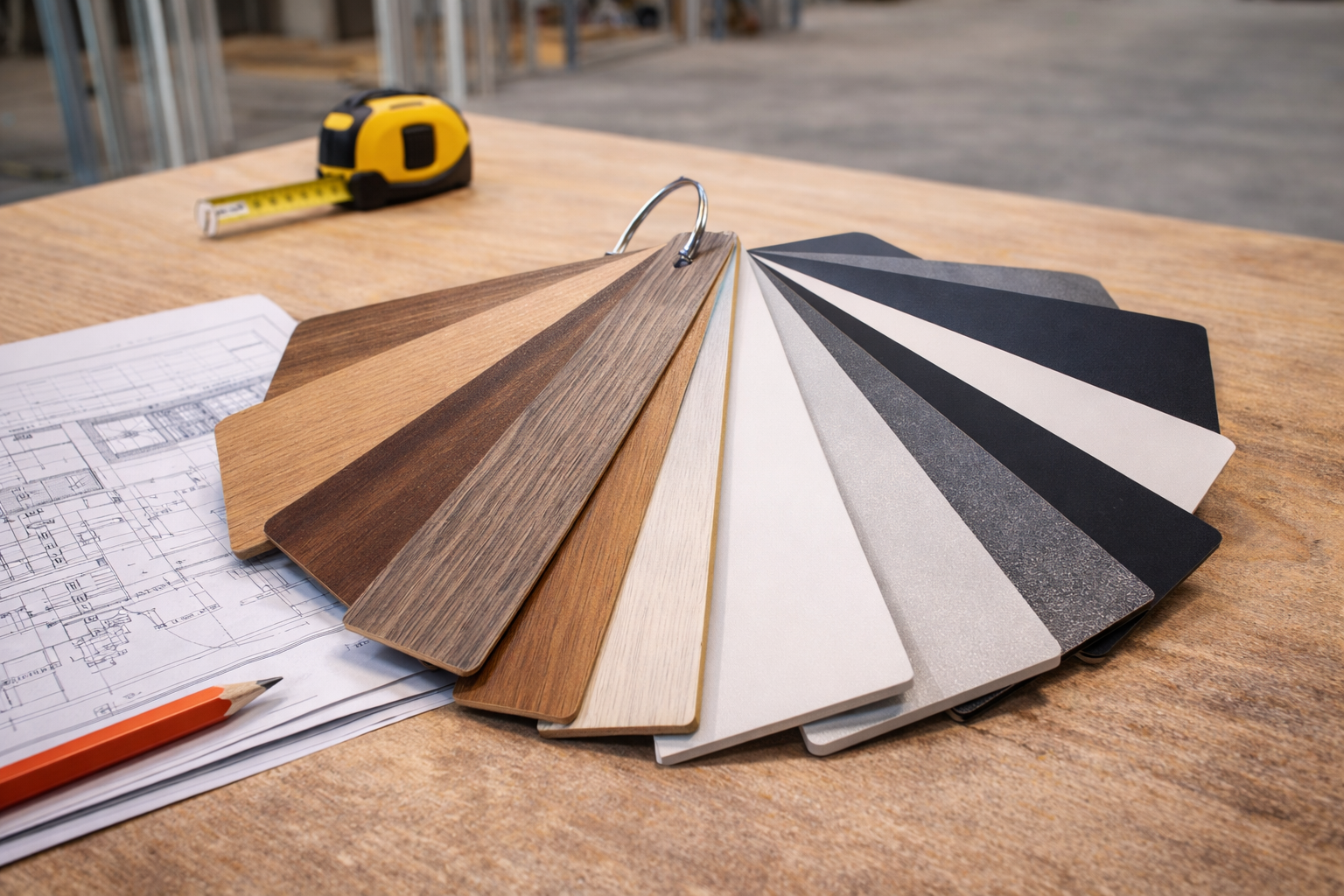
High-Pressure vs Low-Pressure Laminates
High-pressure laminate (HPL) is manufactured using multiple layers of kraft paper bonded under high heat and pressure. The result is a dense, durable surface that resists impact, scratching and general wear.
Low-pressure laminate (LPL), often referred to as melamine, is bonded directly onto a substrate such as MDF or particleboard. While more cost-effective, it is less resistant to heavy use.
HPL is typically specified for:
- High-traffic commercial joinery
- Work surfaces and counters
- Public-facing environments
LPL is more suited to:
- Low-impact cabinetry
- Office interiors with controlled use
- Budget-conscious projects
Bord’s laminate range supports both applications, allowing specifiers to balance cost and durability depending on the project.
Compact Laminates for Heavy-Duty Applications
Compact laminate is a solid-grade panel that does not require a substrate. It offers exceptional durability, moisture resistance and structural integrity.
This makes it ideal for:
- Bathroom partitions
- Locker systems
- Laboratory and healthcare environments
Compared to standard laminates, compact laminate performs better in wet areas and high-abuse settings where longevity is critical.
Surface Performance in Commercial Environments
Durability in commercial interiors goes beyond scratch resistance. Cleaning chemicals, UV exposure and repeated contact all contribute to surface degradation.
Laminates perform particularly well in these environments because they:
- Maintain consistent colour over time
- Resist staining and chemical exposure
- Require minimal maintenance
This is why laminates are often specified in projects that align with the considerations outlined in Laminates vs Timber Veneer in High-Traffic Commercial Spaces.
Where Timber Veneer May Still Be Preferred
While laminates offer durability, timber veneer provides natural variation and warmth that cannot be replicated. In spaces where brand experience or material authenticity is a priority, veneer remains a strong option.
This balance is explored further in Timber Veneer vs Laminate: Which One Should You Choose?, particularly in premium commercial environments.
For projects where a warmer finish is required, Bord’s timber veneer panels are often paired with laminates to balance durability and design.
Specifying Laminates with Confidence
Choosing the right laminate type comes down to understanding how the space will be used. High-impact environments require more durable solutions, while controlled interiors allow for more cost-effective options.
When laminate selection aligns with real-world use, performance improves and long-term maintenance is reduced.


Explore Bord Products
Our Melbourne facility produces hundreds of veneer and laminate panels daily, giving us total control over timeframes and quality.

Visit Our Showroom
Get expert advice on material selection for your project and see our entire range of veneers and laminates in person.

Specify Sustainable
We support sustainable forest management in Australia and across the globe. Look out for certified products on our website or speak to us.