

1. The Rise of Natural Grain Expression
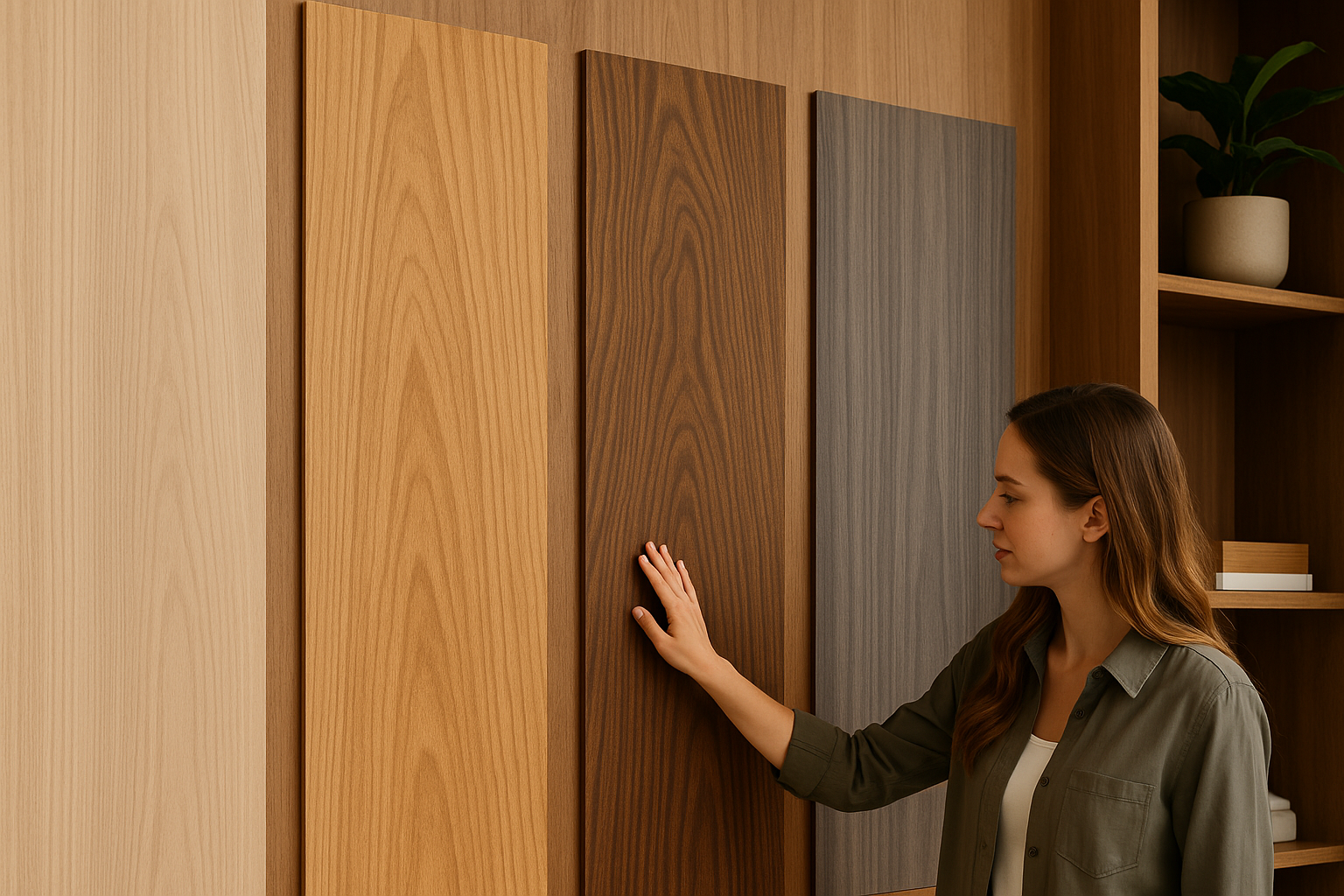
Today’s designers are embracing the raw, organic qualities of timber grain. Instead of hiding imperfections, there’s a growing appreciation for the irregularities that make each veneer panel unique.
Popular directions include:
- Lightly sanded or untreated surfaces to let the natural grain show through
- Minimal stains or clear oil finishes that emphasise authenticity
- Species like American Walnut, European Oak, and Tasmanian Blackwood that showcase strong, character-rich grain patterns
2. Classical Grain Matching Techniques Return
Time-honoured veneer techniques are back and being reimagined for contemporary interiors.
- Bookmatching creates a mirrored pattern using adjacent sheets, perfect for statement pieces like boardroom tables or feature walls.
- Slip matching keeps the grain running continuously from panel to panel, ideal for sleek, minimalist spaces.
- These techniques are being applied across luxury hospitality, executive suites, and retail environments to bring a sense of symmetry and craftsmanship.
3. Texture Takes Centre Stage
Flat, polished surfaces are giving way to more tactile finishes. Texture adds depth, invites touch, and enhances the sensory experience of a space.
Emerging textural treatments include:
- Wire-brushed finishes – Soft grain removed to highlight natural growth rings; a popular look for kitchen joinery and modern furniture.
- Raked veneers – Fine linear grooves create subtle movement, ideal for coastal or contemporary interiors.
- Cross-sawn finishes – Add industrial character, suited for commercial fit-outs and urban developments.
- 3D veneers – Thermoformed or embossed for sculptural impact; used in high-end retail, foyers, and acoustic panelling.
4. Finishes Move Toward Subtle and Sustainable
Finishing trends are evolving to balance aesthetics with durability and environmental impact.
Leading finish trends:
- Matte over gloss: Matte and low-sheen finishes provide a more natural, understated look that enhances grain without overpowering it.
- UV-cured and nano-coatings: These new-gen finishes boost resistance to scratching, moisture, and everyday wear, perfect for commercial kitchens and bathrooms.
- Tinted finishes: Veneers can now be tinted in designer colours like charcoal, sage, or earthy clay tones while still revealing the grain beneath, an elegant middle ground between painted surfaces and natural wood.
Natural oil-based finishes: These preserve the tactile quality of timber and are preferred in wellness-focused or eco-conscious spaces.
5. Sustainability Driving Innovation
Environmental responsibility continues to be a major influence on veneer design and specification.
Key sustainability trends:
- FSC® and PEFC-certified veneers sourced from sustainably managed forests
- Rapidly renewable species like bamboo and eucalyptus are being used more frequently
- Reconstituted veneers made from fast-growing plantation timber for consistency and lower impact
- Low-VOC adhesives and finishes to support healthier indoor air quality
- Reclaimed timber veneers for projects seeking a rustic, aged look with a smaller carbon footprint
6. Digital Customisation is Transforming Selection
Technology is helping architects and designers customise veneer layouts and streamline project planning.
Digital platforms now offer:
- High-resolution flitch scans for remote specification
- Virtual matching previews for bookmatching and slipmatching
- AR and 3D tools to visualise veneers in situ before production
- Precision-cutting previews to reduce waste and control grain continuity across large installations
This digital workflow makes veneer a smarter, more scalable solution for high-volume or multi-site projects.
7. Where Veneers Are Making the Most Impact
Timber veneer is being used across a wide range of commercial and residential applications, thanks to its adaptability and cost-efficiency.
Top applications include:
- Kitchen and bathroom cabinetry with natural texture and warmth
- Wall and ceiling panels for visual impact in lobbies or breakout spaces
- Built-in joinery for sleek, coordinated interiors
- Acoustic and decorative panels in theatres, offices, and retail fit-outs
- Furniture and shelving for custom, design-led outcomes
8. How to Choose the Right Veneer for Your Project
With so many options on the market, selecting the right veneer takes careful consideration.
Here’s a practical checklist to guide your selection:
- Evaluate the environment – For high-use areas, choose veneers with hard-wearing finishes like UV-cured lacquer.
- Match your design intent – Light tones work well in Scandinavian or beach-style interiors, while darker grains like walnut or spotted gum suit modern or corporate styles.
- Prioritise sustainability – Look for certified products and low-VOC glues.
- Request batch control samples – Always inspect the grain and colour under natural light before committing to a large run.
- Work with reputable suppliers – This ensures consistency across panels, access to custom sizing, and proper documentation for sustainability standards.
The Future is Textured, Tailored and Sustainable
The evolution of timber veneer is being shaped by more than just aesthetics, it’s being driven by innovation, environmental awareness, and the need for flexible, tactile design solutions.
Whether you're creating custom joinery for a boutique hotel, feature walls in a corporate office, or cabinetry in a luxury apartment fit-out, today’s veneer products give you more choice, control, and creative freedom than ever before.
Explore our extensive range of premium timber veneers at Bord Products, or contact us to discuss custom finishes, matching solutions, or project-specific recommendations. For more tips, trends, and design inspiration, visit our resources hub.


Explore Bord Products
Our Melbourne facility produces hundreds of veneer and laminate panels daily, giving us total control over timeframes and quality.

Visit Our Showroom
Get expert advice on material selection for your project and see our entire range of veneers and laminates in person.

Specify Sustainable
We support sustainable forest management in Australia and across the globe. Look out for certified products on our website or speak to us.