

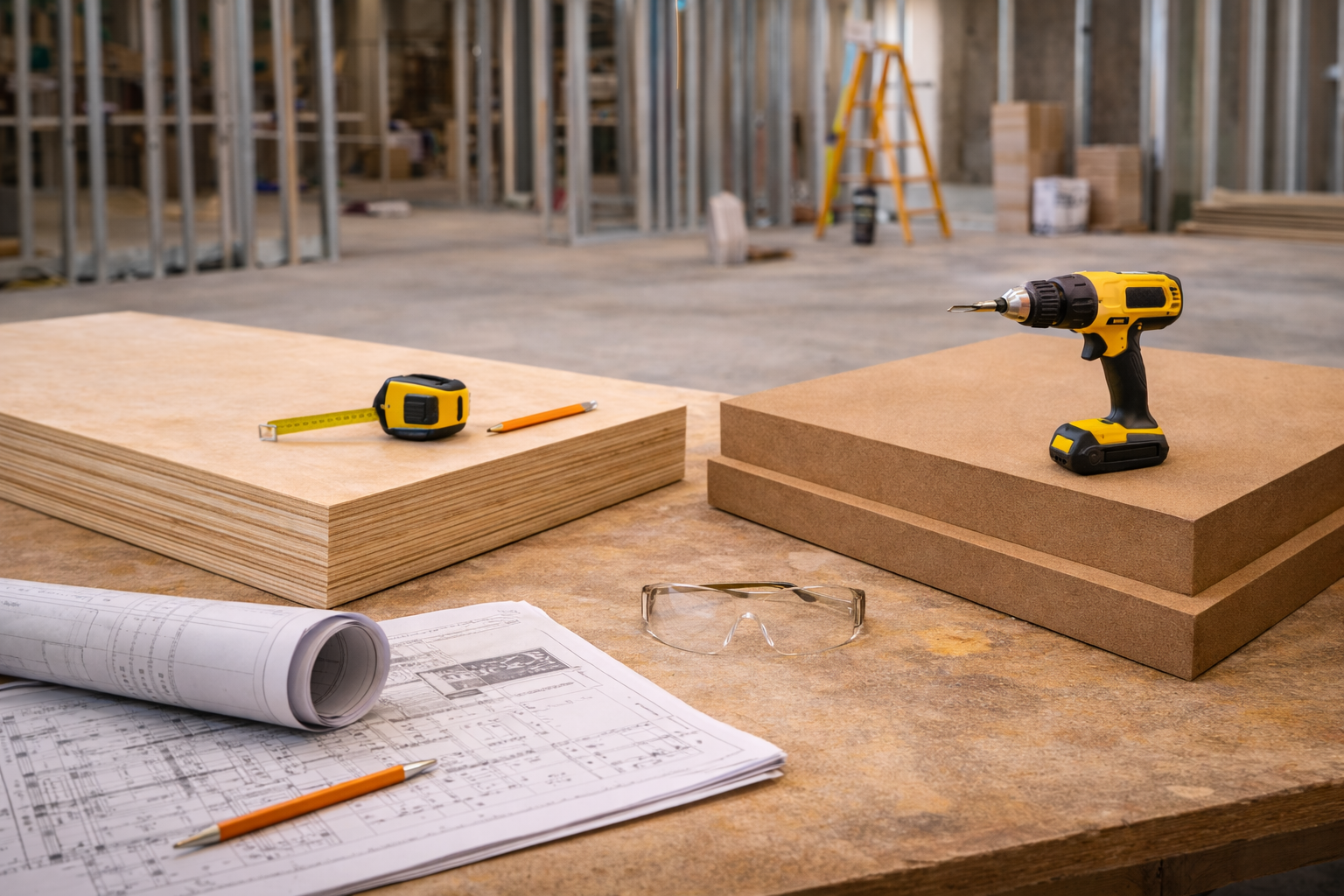
Understanding the core differences
The fundamental difference between plywood and MDF lies in how they’re made. Plywood is constructed from multiple layers of timber veneer, bonded together with alternating grain directions. MDF (medium-density fibreboard) is made from refined wood fibres compressed into a dense, uniform panel.
This difference in structure directly affects performance. Plywood is generally stronger and more impact-resistant, while MDF offers a smoother surface and excellent machinability. In commercial interiors, both materials have a place—just not always in the same applications.
Where plywood performs best in commercial spaces
Plywood is often specified where strength and rigidity are priorities. Its layered construction makes it well suited to load-bearing applications such as cabinetry carcasses, shelving, counters and joinery frameworks.
In Australian commercial projects, plywood is also valued for its stability across varying internal conditions. It handles fixings well, resists sagging and maintains its shape over long spans, making it a dependable substrate behind finished surfaces.
When paired with decorative finishes, plywood provides a strong base that helps veneers and laminates perform consistently. This is one reason it’s commonly used behind wall linings and feature panels in high-traffic commercial areas.
Where MDF excels in commercial interiors
MDF is prized for its smooth, uniform surface and ease of machining. It’s an excellent choice for applications that require crisp detailing, routed profiles or painted finishes.
In commercial interiors, MDF is often used for wall panelling, decorative elements and joinery components where intricate shaping or a flawless surface finish is required. Its consistency makes it particularly suitable for CNC machining and detailed architectural features.
MDF also integrates well with veneer finishes. When combined with selections from a quality timber veneer collection, MDF can deliver refined, visually consistent surfaces across large areas.
Moisture, durability and longevity
One of the most important considerations when choosing between plywood and MDF is moisture exposure. Standard MDF is not suitable for damp environments, while plywood generally offers better resistance to incidental moisture.
That said, specialised MDF products are available for specific conditions. Moisture-resistant and exterior-grade MDF options expand where MDF can be used safely in commercial projects when correctly specified.
Working with suppliers such as Bord Products helps ensure the right panel type is selected for the environment it will be used in.
Cost and build efficiency
Cost often plays a role in panel selection. MDF is typically more cost-effective and produces less waste when intricate machining is required. Plywood may carry a higher upfront cost, but its strength and durability can reduce long-term issues in load-bearing applications.
From a construction perspective, both materials are widely used across Australia and integrate easily into standard commercial build systems. The key is matching the panel to the job rather than relying on a one-size-fits-all approach.
Visual outcomes and finishes
When it comes to finishes, both plywood and MDF can deliver excellent results. Plywood is often concealed beneath veneers or laminates, providing structural support without being visible. MDF is frequently used where painted finishes or detailed profiles are part of the design.
For high-end interiors, finishes like teak veneer are commonly applied to either substrate depending on performance needs, ensuring the final appearance remains consistent regardless of what sits beneath.
FAQs about plywood vs MDF
Is plywood stronger than MDF?
Yes. Plywood generally offers greater structural strength and impact resistance.
Is MDF suitable for commercial interiors?
Absolutely, when used in appropriate applications such as decorative panels, wall linings and detailed joinery.
Can both be used with timber veneer?
Yes. Both plywood and MDF are commonly used as substrates for veneer finishes.
Which is better for long-term performance?
It depends on the application. Plywood excels in structural roles, while MDF performs best where precision and surface finish matter.
Making the right panel choice
Plywood and MDF both play important roles in Australian commercial construction. Understanding their strengths allows designers and builders to specify materials that perform reliably, look great and suit the demands of each space.
By selecting the right panel for the right application, commercial interiors can achieve better durability, efficiency and overall design outcomes.


Explore Bord Products
Our Melbourne facility produces hundreds of veneer and laminate panels daily, giving us total control over timeframes and quality.

Visit Our Showroom
Get expert advice on material selection for your project and see our entire range of veneers and laminates in person.

Specify Sustainable
We support sustainable forest management in Australia and across the globe. Look out for certified products on our website or speak to us.