

Why plywood is a commercial staple
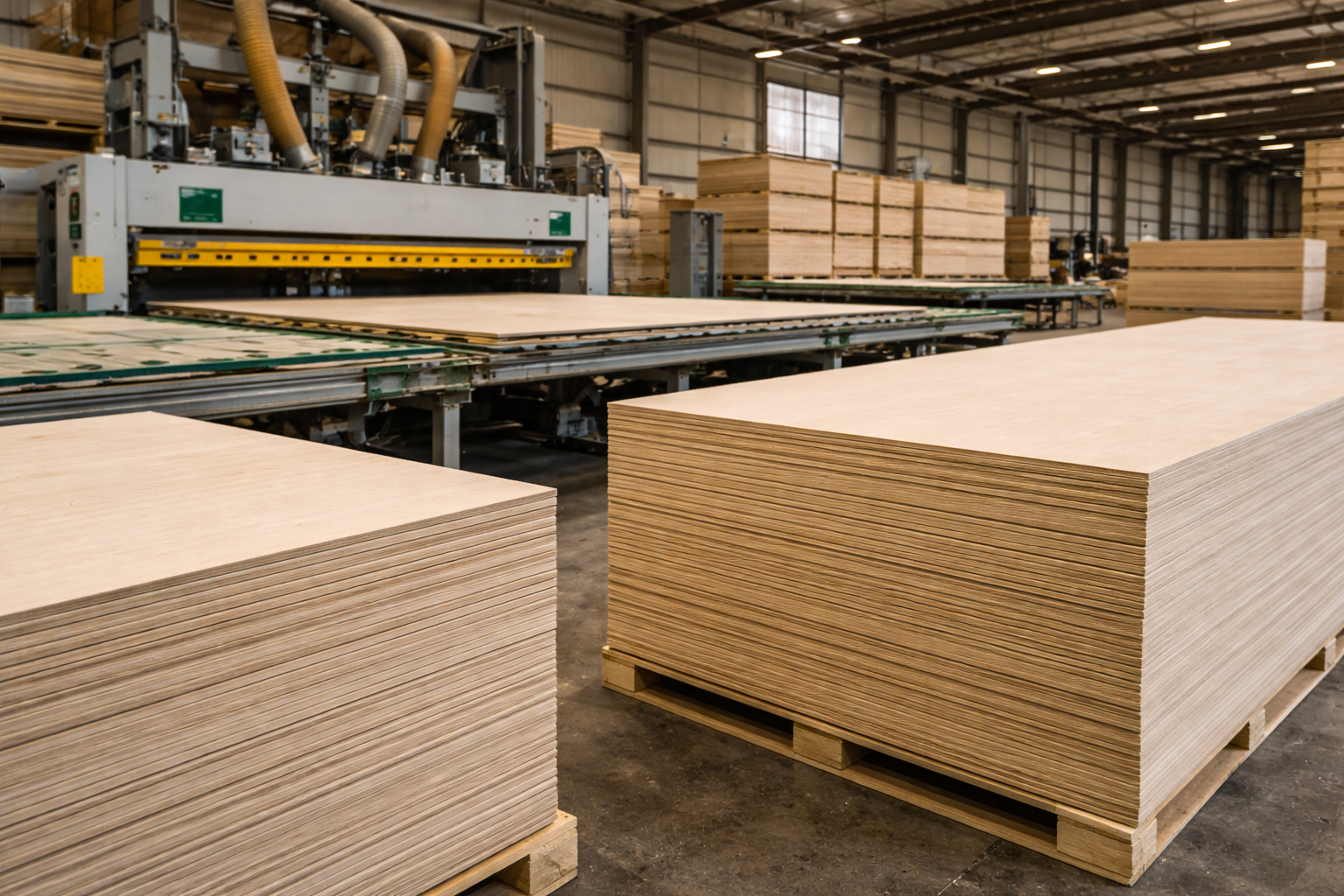
At its core, plywood is an engineered panel made from multiple layers of timber veneer bonded together with alternating grain directions. This cross-laminated structure gives plywood its key advantage: strength and dimensional stability.
In commercial interiors, that stability is essential. Large wall areas, long joinery runs and integrated furniture all need substrates that won’t twist, bow or move under changing internal conditions. Australian buildings often experience fluctuating temperatures and constant air-conditioning, and plywood handles these environments far better than many solid timber alternatives.
Plywood also offers excellent load-bearing capability, which is why it’s commonly used behind finished surfaces in desks, counters, shelving and cabinetry.
Understanding what “commercial-grade” really means
Not all plywood is created equal. Commercial-grade plywood is manufactured to tighter tolerances and higher performance standards than entry-level or residential products.
Key characteristics of commercial-grade plywood typically include:
- strong, consistent core construction
- Minimal voids between layers
- Reliable bonding suitable for long-term use
- Compatibility with high-quality surface finishes
These qualities make commercial plywood suitable for visible applications as well as concealed structural uses. When specified correctly, it provides a solid foundation for high-end finishes without compromising performance.
Where commercial plywood is commonly used
Across Australia, commercial-grade plywood appears in a wide range of interior applications. It’s frequently used as a substrate for wall linings, joinery, cabinetry and custom furniture, particularly in offices, retail spaces and hospitality venues.
In many fit-outs, plywood is selected not for its face value but for what it supports. Veneers, laminates and other decorative finishes rely on stable substrates to look their best. A well-made plywood panel helps ensure those finishes remain flat, aligned and visually consistent over time.
Working with a supplier such as Bord Products allows specifiers to select plywood solutions that integrate seamlessly with commercial veneer and panel systems.
Plywood and veneer: a reliable pairing
One of plywood’s greatest strengths in commercial interiors is how well it pairs with decorative finishes. Timber veneer, in particular, is commonly pressed onto plywood substrates to create panels that are both beautiful and structurally sound.
This combination allows designers to achieve the warmth of real timber while maintaining the strength required for large-scale installations. Selecting finishes from a curated timber veneer collection ensures visual consistency while taking advantage of plywood’s performance benefits.
In higher-end applications, veneers like teak veneer are often applied to plywood to create refined wall panels, joinery and feature elements that perform reliably across large spaces.
Cost efficiency and build practicality
From a construction perspective, plywood is also valued for its predictability. It machines cleanly, accepts fixings well and integrates easily into standard commercial build systems.
This translates into smoother installations and fewer on-site issues—an important consideration on large Australian commercial projects where time, coordination and budget control are critical.
Compared to solid timber, plywood generally offers better material efficiency, reduced waste and more consistent results, particularly when used behind decorative finishes.
FAQs about commercial-grade plywood
Is plywood strong enough for commercial interiors?
Yes. Commercial-grade plywood is specifically designed to handle structural and load-bearing applications in commercial settings.
Can plywood be used in visible applications?
Absolutely. When finished properly or used as a veneer substrate, plywood performs well in visible joinery and wall linings.
Is plywood suitable for long-term commercial use?
When specified correctly, commercial-grade plywood is highly durable and well suited to long-term interior applications.
Does plywood work across different Australian climates?
Yes. Its layered construction makes it more stable than many solid timber products in varying internal conditions.
A dependable backbone for commercial interiors
Is timber veneer suitable for large wall areas?
Yes. Veneer is ideal for large wall linings because it offers visual consistency and dimensional stability.
Can veneer be used in high-traffic commercial spCommercial-grade plywood may not always be the hero finish, but it’s often the backbone of high-performing Australian interiors. Its strength, stability and versatility make it an essential component in fit-outs that need to look good and last.
When paired with quality finishes and specified with care, plywood continues to prove itself as one of the most reliable panel products in commercial construction.tail environments.
Does veneer limit design flexibility?
Not at all. Veneer can be applied to a wide range of panel types and used across different zones within a project.
Is timber veneer a sustainable option?
Veneer uses significantly less hardwood than solid timber, making it a more efficient use of natural resources.


Explore Bord Products
Our Melbourne facility produces hundreds of veneer and laminate panels daily, giving us total control over timeframes and quality.

Visit Our Showroom
Get expert advice on material selection for your project and see our entire range of veneers and laminates in person.

Specify Sustainable
We support sustainable forest management in Australia and across the globe. Look out for certified products on our website or speak to us.