

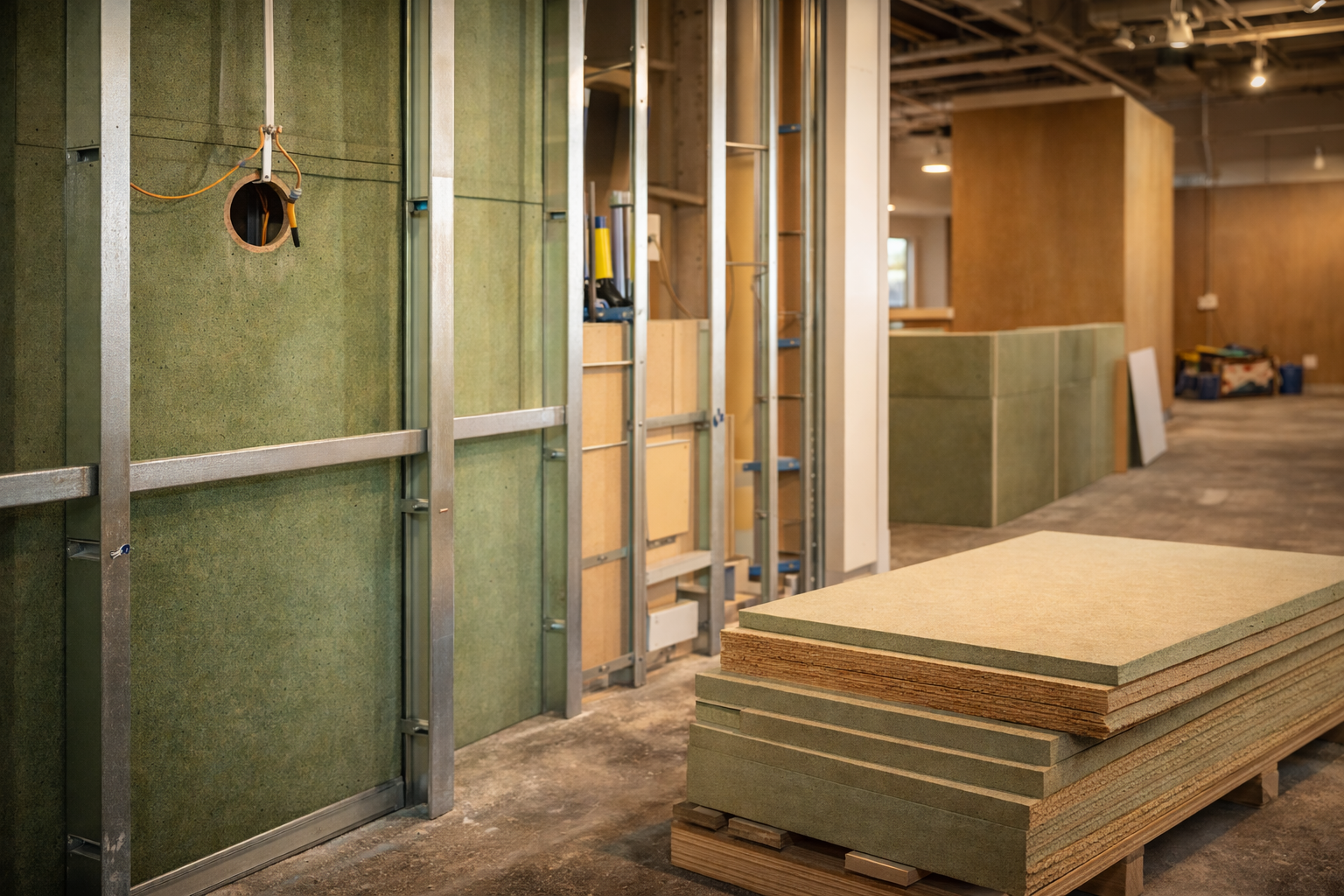
Where Standard MDF Starts to Fail
Standard MDF performs well in dry, climate-controlled interiors. Problems typically appear once humidity, condensation or regular cleaning are introduced. Swelling, edge breakdown and loss of fixing strength are common signs that MDF has been under-specified.
This tends to show up most often in:
- Commercial kitchens and hospitality fit-outs
- Bathrooms and wet areas
- Coastal interiors with high humidity
- Education and healthcare environments
In these settings, upgrading the substrate early can prevent costly rework later.
Moisture-Resistant MDF in Real-World Use
Moisture-resistant MDF is manufactured with additives that slow moisture absorption and improve dimensional stability. It is not waterproof, but it performs far better than standard MDF in environments where intermittent moisture exposure is unavoidable.
It is commonly specified for:
- Kitchen and bathroom joinery
- Wall linings in coastal homes
- Commercial interiors with frequent cleaning
At Bord, we generally recommend moisture-resistant MDF wherever humidity is expected, even if direct water contact is limited.
This approach aligns closely with guidance in Timber Veneers for High-Humidity Areas: What You Need to Know, particularly when veneered finishes are involved.
Fire-Rated MDF & Compliance Requirements
Fire-rated MDF is designed to meet specific fire performance criteria under Australian standards. It is often required in commercial and multi-residential projects where fire resistance levels are mandated under the NCC.
Typical applications include:
- Commercial wall linings
- Escape corridors
- Public and assembly spaces
Fire-rated MDF allows designers to meet compliance requirements without compromising machinability or finish quality. This logic mirrors material selection principles discussed in Fire-Rated Plywood in Australian Construction: Meeting Safety Standards Without Compromising Style.
When MDF Is Not the Right Answer
In some environments, HMR particleboard or plywood may deliver better overall performance than MDF. Substrate selection should always consider moisture risk, fire requirements and the intended finish together, as explored in The Role of Substrates: How MDF, Plywood and HMR Particleboard Impact Timber Veneer Performance.
Specifying With Confidence
Choosing the correct MDF grade is rarely about over-engineering. It is about understanding risk. Where moisture or fire exposure exists, upgrading from standard MDF is often the most practical decision.


Explore Bord Products
Our Melbourne facility produces hundreds of veneer and laminate panels daily, giving us total control over timeframes and quality.

Visit Our Showroom
Get expert advice on material selection for your project and see our entire range of veneers and laminates in person.

Specify Sustainable
We support sustainable forest management in Australia and across the globe. Look out for certified products on our website or speak to us.